With the rapid development of science and technology, photovoltaic power generation technology has been widely used at home and abroad. Its application forms are various and its application places are widely distributed. It is mainly used in large-scale ground photovoltaic power plants, roofs of residential and commercial buildings, building photovoltaic building integration, photovoltaic street lamps, etc. In these places, buildings, trees, chimneys, dust and clouds will inevitably block solar cell components. Therefore, people are concerned about the impact of this kind of situation on the power generation efficiency of solar cells, and how to solve it?
In practical applications, solar cells are usually connected in series or in parallel by multiple cell modules to obtain the desired voltage or current. In order to achieve high photoelectric conversion efficiency, each cell in the cell module must have similar characteristics. In the process of use, one or a group of batteries may not match, such as cracks, internal connection failure or blackout, resulting in its characteristics and overall disharmony. Under reasonable lighting conditions, the shaded photovoltaic cells in a series of branches will change from power generation units to power consumption units. The shaded photovoltaic cells not only have no contribution to the output of the modules, but also consume the power generated by other batteries. At this time, they will generate heat, which is the thermal spot effect.
Compared with crystalline silicon, the film thickness of the amorphous silicon thin film battery module is relatively uniform on the whole module, the current matching of multiple sub cells is good, and there will be no crack or hidden crack in the crystalline silicon module. The amorphous silicon photovoltaic module made by excellent production process and strict quality control system will hardly have internal link of each sub cell in the thin film module Failure. In addition, for crystalline silicon solar cells, small occlusion can cause high power loss, resulting in high temperature of the components, which will burn the components seriously and even cause a major fire; however, the current density of amorphous silicon thin film batteries is small, and shadow occlusion will also have an impact on the thin film batteries, but the impact is much smaller than that of crystalline silicon batteries.
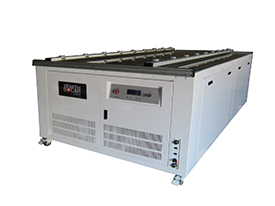
In view of the hot spot effect of thin film photovoltaic products, the International Electrotechnical Commission has formulated strict certification test standards, and the products must withstand the test of hot spot effect under extremely severe conditions. After the hot spot durability test of the thin film photovoltaic module, the first step is to conduct visual inspection, and record or take photos of any crack, bubble or delamination. If serious appearance defects specified in the standard are found, such as: broken, cracked, bent, irregular or damaged external surface; any film layer in the effective working area of the module has more than 10% of the space of a battery area, visible corrosion, forming continuous bubbles or peeling layer between the edge of the module and any part of the circuit, which leads to the loss of mechanical integrity of the module If the installation or work is affected, it shall be deemed as unqualified. If there are appearance defects but they do not belong to the above serious appearance defects, such as: any film layer in the effective working area of the module has gaps and visible corrosion, the output wire has visible corrosion, etc., take photos for recording; if there is no impact on other subsequent test experiments, it is considered that the thin film photovoltaic module has passed the hot spot effect test, if there is an impact, select another one Re test the hot spot effect of the two components. In addition, the attenuation of the maximum output power of the component under the standard test conditions shall not exceed 5% before the test; the insulation resistance shall meet the same requirements of the initial test.
The common way to solve the problem of hot spot effect is to parallel a diode on the module. Normally, this diode does not affect the normal operation of the assembly. When the battery in the module is blocked, the diode is on at this time, so as to avoid overheating damage of the covered battery.



 中文
中文 ENGLISH
 Notice :
  Click to enter our shop in Made-in-China